
5 Common Spanish Nouns Every Beginner Should Know
Learning a new language can feel overwhelming at first, but mastering a handful of common nouns gives you a solid foundation to build on. Spanish nouns form the backbone of everyday conversation, whether you’re ordering food, asking for directions, or making small talk. This list highlights five essential categories of Spanish nouns that appear constantly in real-world situations. By focusing on these high-frequency words, you’ll start recognizing patterns and building confidence faster than you might expect.
- Everyday Objects Around the HouseSpanish nouns for household items are some of the most practical words you’ll learn. Words like “mesa” (table), “silla” (chair), “puerta” (door), and “ventana” (window) show up in nearly every conversation about daily life. These nouns also help you understand gender rules in Spanish, since “mesa” and “puerta” are feminine while “silla” takes a feminine article despite ending differently.
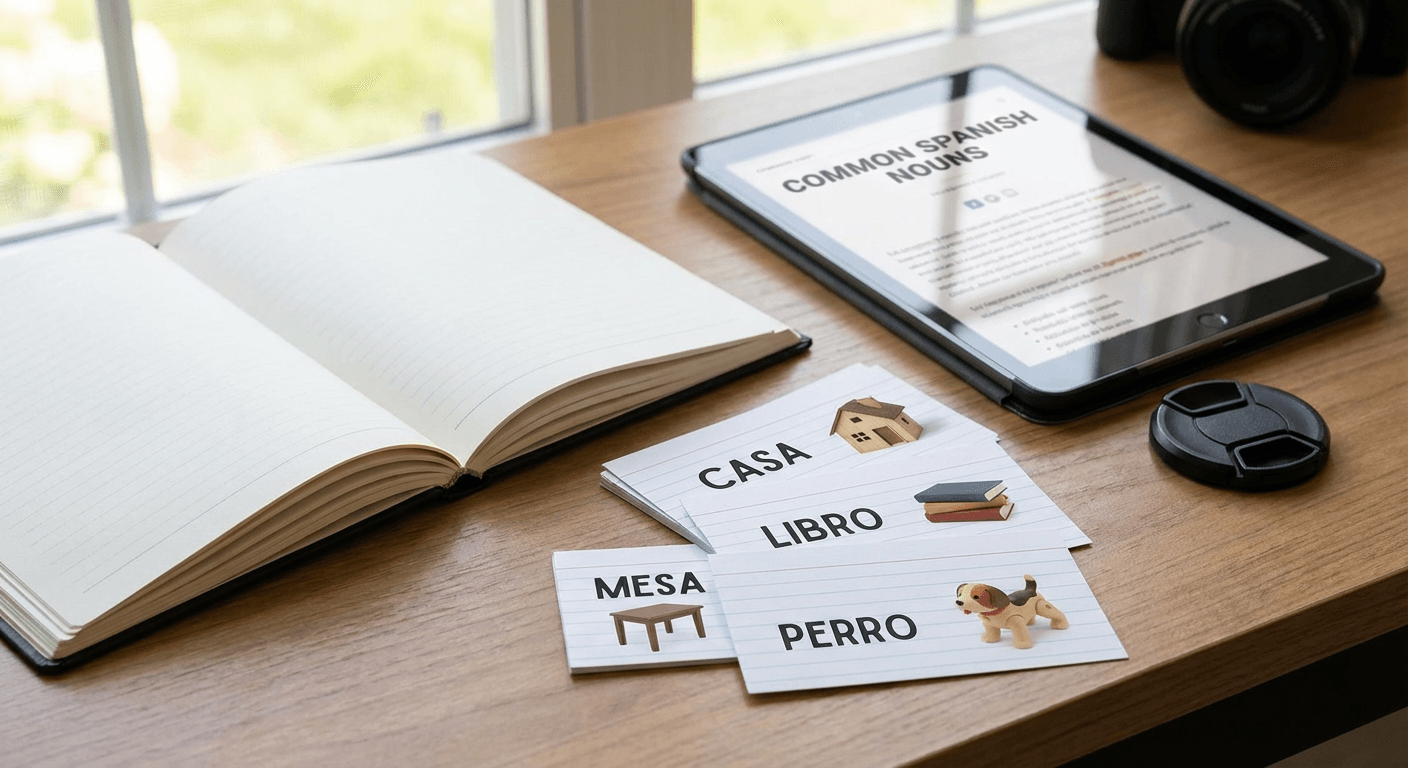
Practicing these words in context makes them stick. Try labeling items around your home with sticky notes that show both the Spanish word and its article (“la mesa,” “el libro”). This simple method reinforces both vocabulary and the gender system that trips up many beginners.
- Food and Drink VocabularyIf you plan to travel to a Spanish-speaking country or simply want to order at a local restaurant, food nouns are non-negotiable. Start with basics like “agua” (water), “pan” (bread), “carne” (meat), “pollo” (chicken), and “arroz” (rice). These words appear on virtually every menu and in countless recipes.
Fruit and vegetable names are equally useful. “Manzana” (apple), “naranja” (orange), “tomate” (tomato), and “lechuga” (lettuce) give you the language to shop at markets or discuss meals. Many food nouns follow predictable patterns, making them easier to remember once you’ve learned a few examples.
- Family Members and RelationshipsTalking about family is one of the first topics that comes up in conversation, so knowing these nouns opens doors to real connections. “Madre” (mother), “padre” (father), “hermano” (brother), “hermana” (sister), and “hijo” or “hija” (son or daughter) are essential starting points.
What makes family vocabulary interesting is how it reflects cultural values. Spanish has specific words for extended family that English speakers often describe with multiple words. “Cuñado” means brother-in-law, “suegra” means mother-in-law, and “sobrino” means nephew. Learning these shows respect for family structures that matter deeply in Spanish-speaking cultures.
- Time-Related NounsUnderstanding time vocabulary helps you schedule meetings, make plans, and talk about your routine. Basic nouns include “día” (day), “semana” (week), “mes” (month), “año” (year), and “hora” (hour). Days of the week and months of the year build on these foundations.
Time nouns often work together with other common words to create useful phrases. “Buenos días” (good morning) combines “buenos” with “días.” “Fin de semana” (weekend) literally means “end of week.” These combinations feel natural once you know the individual pieces, and they help you sound more fluent in everyday situations.
- Places and Locations in TownNavigating a Spanish-speaking area becomes much easier when you know location nouns. “Calle” (street), “plaza” (square), “tienda” (store), “restaurante” (restaurant), and “banco” (bank) help you ask for and understand directions. “Casa” (house) and “trabajo” (work) describe where you’re going or coming from.
These nouns pair naturally with prepositions to create complete thoughts. “En la tienda” means “in the store,” while “cerca del banco” means “near the bank.” Once you’re comfortable with place nouns, adding directional words like “derecha” (right) and “izquierda” (left) gives you everything you need to get around confidently.
Mastering these five categories of common Spanish nouns gives you a practical vocabulary for real-life situations. You don’t need to memorize hundreds of words at once. Focus on these high-frequency nouns, practice them in context, and you’ll notice how quickly they become second nature. The beauty of learning nouns is that each one you add expands what you can say and understand. Keep building on this foundation, and you’ll find yourself communicating more naturally than you thought possible.